
Effects on Fed Trend Towards Rising Interest Rates on Alternative Investments
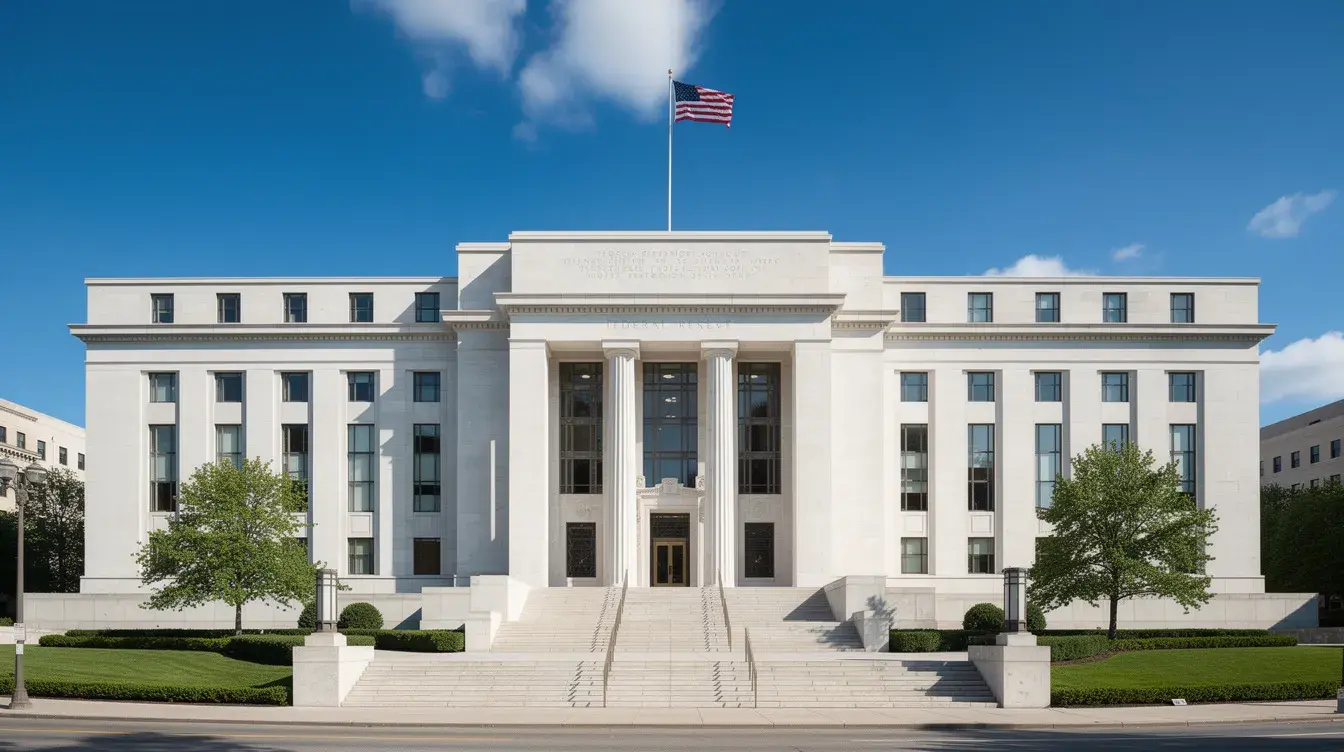
The Federal Reserve raised interest rates to 3.75%–4.00% on September 16, 2026, and alternative investors are recalculating. This article breaks down, asset class by asset class, what rising rates mean for private credit, real estate, private equity, venture capital, hedge funds, and real assets.
Executive summary for accredited alternative investors
On September 16, 2026, the Federal Reserve lifted the federal funds rate to 3.75%–4.00%. This was the first rate hike in over three years, and investors expect three additional rate hikes by mid-2027. For members of 506 Investor Group, this shift reshapes every corner of the alternative investment landscape. Higher interest rates raise capital costs across traditional and alternative asset classes, which compresses valuations for some strategies and opens doors for others.
The repricing is not uniform. Here is a quick map of directional effects when the Fed raises interest rates:
- Private credit and direct lending: floating-rate structures pass higher rates directly to lenders as increased coupon income, but borrower default risk also rises
- Real estate equity: cap rates drift upward, property values face pressure, and distressed opportunities emerge for buyers with liquidity
- Real estate debt and preferred equity: yields on new originations climb, offering attractive risk-adjusted income
- Private equity: leverage becomes more expensive, compressing buyout returns and forcing a shift toward operational value creation
- Venture capital: long-duration, back-loaded cash flows lose present value; new vintages may benefit from lower entry prices
- Hedge funds: volatility creates tactical opportunities in macro, relative value, and managed futures strategies
- Real assets: inflation-linked contracts in infrastructure and commodities can preserve real returns
Rising rates can enhance income-oriented strategies in alternative investments, while simultaneously punishing over-leveraged legacy positions. The core message: patient, well-capitalized investors with dry powder can capture dislocations that forced sellers and poorly hedged sponsors cannot.
Why 506 Investor Group is structurally well positioned for this environment:
- No sponsor conflicts: discussions focus on risk-return trade-offs, not product sales
- Collective bargaining: 4,000 accredited members negotiate lower management fees and better terms on deals
- Shared due diligence: peer-reviewed underwriting catches the aggressive assumptions that rising rates punish most
How the Federal Reserve's rate hiking cycle has evolved since 2022
In March 2022, the Federal Open Market Committee of the Federal Reserve, one of the key central banks shaping monetary policy, began raising the federal funds rate from near zero (0.00%–0.25%), where it had sat since early 2020. Over the next 18 months, the Fed moved aggressively. By December 2022, the target range stood at 4.25%–4.50% after multiple 50 and 75 basis point increases. The cycle peaked around mid-2023 at 5.25%–5.50%.
Through 2024 and into early 2025, the Fed held rates steady as inflation gradually cooled. An interest rate cutting cycle brought the range down to roughly 3.50%–4.00% by late 2025. Then, on September 16, 2026, the Federal Reserve reversed course by hiking interest rates back to 3.75%–4.00%, a quarter percentage point increase that signaled renewed concern about price stability. The Fed's target inflation rate remains 2%, and persistent readings above that level drove the decision. A tight labor market; stubborn inflation expectations visible in bond market breakevens; and higher energy prices all contributed.
Three rates matter for alternative investors, not just one. The federal funds rate sets overnight borrowing costs between banks. The discount rate is what the Federal Reserve Bank charges commercial banks at the discount window. Long-term Treasury yields (10-year, 30-year) reflect market expectations for future inflation, economic growth, and the Fed's trajectory. Alternative investors must track all three: the funds rate drives floating-rate loan coupons in private credit; long-term yields drive cap rates in real estate and discount rates for venture capital valuations.
The 2026 stance suggests "higher for longer." Lower interest rates tend to return only when economic weakness forces the Fed's hand. Until then, every capital-intensive alternative strategy must underwrite against a world where cheap money is not coming back soon.
Mechanics: why rising interest rates matter for all asset classes
Interest rates are the price of money. When rates rise, four transmission channels reshape public and private markets simultaneously:
- Discount rate effect: higher risk-free yields raise the baseline rate used to value future cash flows. Long-duration assets (growth stocks, venture-backed startups, long-lease real estate) lose more present value per basis point of increase.
- Leverage cost: floating-rate debt becomes more expensive immediately; new fixed-rate debt reprices at issuance. Net cash flows for leveraged sponsors shrink.
- Risk premium normalization: investors demand larger spreads above risk-free rates to compensate for credit risk, illiquidity, and concentration. The opportunity cost of holding illiquid alternatives rises in a high-rate environment because safe instruments now pay meaningful yield.
- Capital allocation shifts: when Treasuries yield 4%+, capital migrates from risk assets unless those assets clear a higher return hurdle.
Higher rates can reduce stock valuations despite unchanged earnings outlooks, simply because the present value of those earnings shrinks at a higher discount rate. The same logic applies to private market valuations. Meanwhile, rising interest rates can slow consumer spending and business expansion: higher mortgage rates and loan payments reduce disposable income, and higher borrowing costs can slow demand for durable goods purchases. Businesses face decreased revenues when consumer spending declines, which feeds back into corporate profits and private company cash flows.
For alternative investors, this repricing can simultaneously hurt legacy holders and create attractive entry points for new allocations.
Impact of higher interest rates on traditional fixed income and the search for alternatives
The 2022–2026 hiking cycle produced one of the sharpest drawdowns in traditional fixed income in decades. Bond prices fall as interest rates rise; this is mechanical, not speculative. Longer bonds are more sensitive to interest rate changes because their cash flows stretch further into the future, making duration risk the dominant factor. Long-maturity Treasuries (20+ years) with low legacy coupons lost double-digit percentages of value as yields moved from near zero to above 4%.
When newly issued bonds offer higher yields after a rate hike, market demand for existing bonds falls. Conversely, bond prices rise as interest rates fall, but the Fed's current trajectory points away from that scenario. The fixed income risks embedded in long-duration portfolios have forced many high-net-worth investors to rethink their allocations.
With the funds rate at 3.75%–4.00%, investors now demand spreads well above that benchmark to justify locking capital into illiquid credit alternatives. Data from the Federal Reserve Bank of Boston shows BDC portfolios carrying median spreads of 4–5 percentage points over SOFR, compared with roughly 2 points for broadly syndicated high yield bonds. Members of 506 Investor Group routinely compare risk-adjusted yields on private notes, structured deals, and debt securities directly against current Treasury yields before committing. If a private credit fund cannot meaningfully outperform a 4% risk-free rate after fees and illiquidity, the investment objective is not met.
Repricing of growth stocks and the resulting appetite for alternatives
Growth stocks depend on cash flows projected years or decades into the future. When the discount rate rises, those distant cash flows shrink in present-value terms. Between 2022 and 2024, the stock market saw multiple compression across technology, biotech, and other high-multiple sectors. Price-to-earnings and price-to-sales ratios fell as yields climbed.
Higher rates can reduce stock valuations even with unchanged earnings. Rising rates can increase corporate interest expenses, reducing profits for companies that carry floating-rate or maturing debt. Higher Treasury yields make stocks less attractive to investors seeking growth because the alternative of earning 4%+ risk-free resets the equity risk premium.
Yet the equity market in 2026 is not uniformly negative. Nine of 11 S&P 500 sectors had positive returns in 2026. The energy sector led market performance in 2026 amid rising rates, while financial institutions benefit from higher interest rates through increased margins on lending. Utilities face pressure from higher interest rates despite rising demand, and the healthcare sector offers long-term opportunities despite varying company results.
For accredited investors, the takeaway is that public market dispersion creates comparison points. Alternative strategies offering stable cash flows, downside protection, or lower correlation to higher stock prices often see rising demand when growth stocks wobble. Members use 506 Investor Group discussions to evaluate whether a new private credit deal or income-oriented real estate position offers a better risk/return profile than simply rotating between growth stocks and value stocks in public markets.

Private credit and direct lending in a higher-rate world
Private credit includes loans originated by non-bank lenders to middle-market companies, real estate sponsors, and asset-backed borrowers. Common structures in member deal flow include senior secured loans, unitranche facilities, real estate bridge financing, and specialty finance. Most of these carry floating-rate coupons benchmarked to SOFR plus a spread.
Higher interest rates benefit private credit due to floating-rate loan structures: as the Fed raises interest rates, SOFR resets higher, and lenders collect larger coupon payments. North America-focused private credit funds raised nearly $100 billion in 2024 and approximately $87 billion in 2025, reflecting persistent demand for yield and income alternatives. Bank tightening has also widened the opportunity set, as traditional lenders pull back from certain borrower segments and private lenders step in at wider spreads and stronger covenants.
The risks are real. Higher risks for private credit arise from increased debt service burdens for borrowers. When interest payments consume a growing share of a borrower's cash flow, default probability increases. Boston Fed research shows rising use of PIK (payment-in-kind) interest across BDC portfolios, a signal that some borrowers cannot cover cash interest. Alternative investments must demonstrate higher risk-adjusted returns in a high-rate environment; otherwise, investors should simply hold Treasuries.
Underwriting discipline matters now more than at any point since 2008:
- Conservative loan-to-value ratios (below 65% for real estate, lower for cash-flow loans)
- Stress-tested debt-service coverage under scenarios where rates stay elevated
- Sponsor equity of at least 30–35% to absorb losses before the lender is impaired
- Realistic exit assumptions; credit risk refers to the borrower's ability to refinance or repay at maturity
506 Investor Group's collective bargaining power can negotiate better terms and lower fees in private credit funds or club deals than an individual investor might obtain alone.
Real estate equity: cap rates, debt costs, and distressed opportunities
Higher borrowing costs compress real estate valuations and transaction activity. The mechanism is straightforward: cap rate equals net operating income divided by property value. When risk-free rates rise, cap rates tend to drift higher because buyers demand returns that clear the increased cost of capital. Unless net operating income grows enough to offset, property values fall.
CBRE's H1 2026 survey covered 3,600 cap rate estimates across 50+ U.S. markets. Average cap rates held roughly flat in the first half of 2026, even as the 10-year Treasury yield peaked at approximately 4.67% in mid-May. Within property types, multifamily cap rates were unchanged from Q4 2024 to Q4 2025; office and retail rose by about 0.2% and 0.1% respectively; industrial dropped by roughly 0.1%.
Higher mortgage and construction loan rates lower transaction volumes in real estate. Properties acquired with floating-rate bridge debt in 2021–2022 now face refinancing at rates 200–400 basis points higher. Over-levered assets in office, retail, and hospitality face particular stress. Real estate valuations decrease as capitalization rates must rise to match higher borrowing costs, and motivated sellers may accept discounts from well-capitalized buyers.
What to look for:
- Conservative leverage (below 60% LTV on stabilized assets)
- Strong in-place cash flow with lease escalators tied to CPI
- Fixed-rate or hedged floating-rate debt with at least two years of remaining term
- Realistic assumptions about rent growth and exit cap rates
Members should use group due diligence threads to scrutinize any real estate offering that relies on aggressive refinance or sale assumptions.

Real estate debt and preferred equity as income-oriented alternatives
Owning real estate equity and participating in the capital stack through senior debt, mezzanine debt, or preferred equity are fundamentally different risk-return propositions. Real estate investment trusts and direct equity positions take the first loss when property values decline. Debt holders, by contrast, sit higher in the stack and receive principal and interest payments before equity sees a dollar of return.
As interest rates rise, real estate debt has become more attractive for income-focused investors. Senior mortgage originations in 2025–2026 carry coupons well above what was available in the 2020–2021 era. Higher rates increase the attractiveness of cash-like alternatives due to rising yields, and real estate debt offers a middle ground: higher yields than Treasuries, with less volatility than equity ownership.
Underwriting now centers on debt-service coverage ratios and exit scenarios. Key risk factors include:
- Borrower quality and track record
- Property-type concentration (office exposure remains a concern)
- Regional economic exposure and tenant credit
- The possibility that higher rates persist longer than modeled, eroding refinancing options
Members of 506 Investor Group should compare fee structures, default remedies, and downside protections across competing funds or note programs. An individual's financial circumstances determine whether senior debt at 8–9% yield or preferred equity at 11–13% with more risk is the right fit. Past performance in prior rate cycles is a useful filter, though it does not guarantee future results.
Private equity and buyouts: from multiple expansion to operational value creation
The low-rate era rewarded a simple formula in private equity: buy at a reasonable multiple, apply cheap leverage, and sell into a market where multiples expanded. That formula breaks when the Fed raises interest rates. Private equity deal activity slows as higher rates increase debt costs, and rising interest rates compress valuations for growth-heavy sectors in private equity.
Investors may shift toward strategies focusing on operational efficiency and value creation. Managers who can cut costs, grow revenue organically, and improve profit margins without relying on financial engineering become more valuable. Entry valuation discipline improves because public comparables have de-rated, and sellers must adjust expectations to the new interest rate reality.
Practical considerations for LPs evaluating private equity funds:
- How much leverage does the fund typically use? Debt-to-EBITDA above 5x raises risk in a higher-rate environment.
- Does the manager hedge interest rate exposure through swaps or caps?
- What is the manager's track record through prior rising rate cycles (2004–2006, 2016–2018)?
- What is the expected hold period, and how does that interact with interest rate hikes?
Investors face cash flow bottlenecks due to slower exits in private equity. IPO windows have narrowed, and strategic acquirers are pickier about price. Liquidity constraints develop from slower deal activity in private equity and real estate, so LPs should plan for longer hold periods and delayed distributions. Members reviewing PE performance metrics should stress-test IRR projections against a scenario where exit timing slips by 12–18 months.
With 4,000+ members, 506 Investor Group can sometimes negotiate reduced carried interest or management fees when committing collectively to co-investments or actively managed funds.
Venture capital and growth equity under higher discount rates
Venture capital and late-stage growth equity sit at the far end of the interest rate sensitivity spectrum. Returns are back-loaded; a startup funded today may not generate liquidity for seven to ten years. When the federal funds rate sits near 4%, the present value of those distant payoffs drops compared to a zero-rate world.
The 2022–2024 hikes contributed to valuation resets, down rounds, and a slower exit market for IPOs and SPACs. Investors seeking growth through venture must now weigh certain quantitative investment characteristics more carefully: burn rate relative to runway, unit economics, and path to profitability. Fundraising has cooled, and LPs are more selective.
For new vintages, the picture is different. Lower entry valuations combined with more investor-friendly terms (stronger liquidation preferences, lower valuation caps) can create return upside that prior vintage investors did not have. Secondary opportunities, where LP stakes in venture funds trade at discounts to NAV, are another avenue. Members of 506 Investor Group may prioritize access to top-quartile, specialized managers who demonstrated discipline in prior cycles, and selectively pursue secondaries or niche technology exposures where pricing reflects the rate environment rather than 2021 exuberance.
Hedge funds and liquid alternatives in a regime of higher volatility
Market volatility from rising rates may create tactical opportunities in hedge funds. Higher and less predictable interest rates widen the dispersion of returns across securities, sectors, and geographies. That dispersion is raw material for skilled managers.
J.P. Morgan estimates that, since 1995, roughly 60% of increases in short-term rates have flowed through to hedge fund industry excess returns on average. Strategies that can benefit include:
- Global macro: profits from rate differentials, yield curve trades, and currency dislocations
- Relative-value fixed income: captures mispricing between bonds of similar credit quality but different structures
- Market-neutral equity: isolates stock-specific returns from broad market risk
- Managed futures: trend-following models can capture sustained rate moves
Hedge fund performance varies widely based on strategy in a rising-rate environment. Hedge funds can exploit pricing inefficiencies during periods of market volatility, but those same periods can destroy funds that carry excessive directional exposure or use leverage without discipline. Interest rate correlations between a fund's positions and the Fed's trajectory should be a core diligence item.
Members should share actual track records through the 2018 tightening, the 2020 COVID shock, and the 2022–2026 rate and volatility episodes when evaluating new allocations. Higher portfolio turnover and complex derivatives increase fee drag; make sure net-of-fee returns justify the complexity. Such investment factors and targeted investment factors should be specified in the fund's documentation.
Real assets: infrastructure, commodities, and inflation-linked exposures
Some real assets feature contractually linked cash flows that adjust with inflation or interest rate benchmarks. Regulated utilities, energy pipelines, and toll roads with CPI-escalator clauses can maintain real returns even as nominal rates rise. PGIM data covering 1971–2024 shows that during periods of high and rising inflation, real assets generated higher nominal and real returns compared to equities or bonds.
Commodities serve as a partial hedge when inflation is driven by supply or energy shocks. Rising inflation expectations can push commodity prices higher, benefiting resource-focused strategies. However, higher discount rates can lower valuations for long-duration infrastructure (airports with 30-year concessions, for example), so the hedge is imperfect.
Investors negotiating new commitments to infrastructure funds in 2025–2026 report better yield terms and higher upfront returns. Sellers and issuers know borrowing costs have increased, so they accept more investor-friendly structures. Members of 506 Investor Group should evaluate fee drag carefully; multi-layered fund structures in infrastructure can eat into net future results. The funds investment objectives should specify whether the strategy targets inflation protection, yield, or total return.
Secondaries, special situations, and distressed strategies
Rising interest rates expose weak balance sheets. Companies that could service debt at 3% struggle when refinancing at 7%. Over-levered capital structures crack, and the resulting distress creates opportunity for buyers who can underwrite credit risk and provide rescue capital.
LP secondary markets offer stakes in private equity, venture, or real estate funds at discounts when other investors face liquidity pressure. In 2025–2026, secondary pricing for mid-tier PE funds traded at 10–20% discounts to reported NAV, depending on strategy and vintage. Distressed credit funds target companies unable to roll debt at higher interest rates, negotiating favorable terms or equity conversions.
Diligence priorities:
- Manager experience in prior distressed cycles (2008–2009, COVID, 2022)
- Structures with downside protection (equity kickers, senior position in the capital stack)
- Pacing of capital calls relative to the Fed's ongoing rate path
- Vintage diversification across years to avoid concentrated exposure to a single interest rate environment
506 Investor Group's collective intelligence helps members distinguish genuine cyclical distress from structurally impaired sectors where rising rates have permanently altered the economics.
Portfolio construction: integrating alternatives in a higher-rate environment
The classic 60/40 portfolio (60% equities, 40% bonds) failed to protect capital when both stock prices and bond prices fell simultaneously in 2022. In a world where the federal funds rate stays elevated, alternative allocations deserve intentional sizing rather than a residual bucket.
A practical framework segments alternatives by objective:
| Bucket | Strategies | Primary role |
|---|---|---|
| Income | Private credit, real estate debt, preferred equity | Current yield above risk-free rate |
| Growth | Private equity, venture capital, growth equity | Long-term capital appreciation |
| Diversification / Hedge | Macro hedge funds, managed futures, real assets, commodities | Reduce correlation to equity market and bond market moves |
Map each strategy's sensitivity to three variables: interest rates (cost of leverage, discount rate effect), inflation (cost pass-through, earnings growth potential), and economic growth (consumer spending, business investment). Do not treat "alts" as a single category; the interest rate environments that help private credit can hurt venture capital.
Pacing commitments across multiple vintages smooths exposure to any single rate regime. Liquidity management is critical: illiquid alternatives with 7–10 year lockups must fit within the investor's overall cash needs. The denominator effect (falling public market values making alternative allocations look outsized on a percentage basis) requires guardrails.
Unlike a retail-focused financial advisor selling products, 506 Investor Group members collectively design their own allocations, informed by peer experience and unbiased discussion.

Risk management, scenario analysis, and limits of rate forecasting
No one can reliably forecast exact interest rate paths. The yield curve, inflation data, labor market reports, and the ever increasing national debt all feed into the Fed's decisions, but the timing and magnitude of moves remain uncertain. Investing involves risk regardless of the rate environment.
Three scenarios worth modeling:
- Higher for longer: the federal funds rate stays at or above 4% through 2028. Levered strategies face sustained pressure; income strategies continue to benefit. Immediate market reactions to each FOMC meeting create short-term volatility.
- Recession-driven cuts: economic weakness forces the Fed into a new interest rate cutting cycle. Bond prices recover, but credit defaults spike as economic growth contracts. Lower yielding assets regain relative appeal.
- Stagflation: inflation stays above target while growth stalls. Real returns turn negative for fixed income; real assets and commodities outperform; growth equity and PE suffer from both margin compression and multiple contraction. Substantial volatility across financial markets becomes the norm.
Risk controls for alternative portfolios:
- Concentration limits by strategy, sponsor, and sector
- Leverage caps; stress-test using interest rate assumptions 200 bps above current levels
- Exit multiple compression: model 1–2 turns of multiple contraction on PE and real estate
- Strict underwriting standards; never accept investment advice that assumes rates return to zero
The 506 Investor Group's no-sponsor, no-capital-raiser rule keeps discussions focused on investment strategy and risk factors, not marketing narratives about guaranteed future results. This is not investment advice for any individual; it is a framework for thinking about such investment factors and quantitative investment characteristics in a peer-reviewed setting.
Using 506 Investor Group to navigate rising-rate alternative opportunities
506 Investor Group functions as a private, conflict-free community of approximately 4,000 accredited investors who share deal flow and due diligence on alternative investments. No sponsors or capital raisers are permitted. Self-promotion is banned. The result: unbiased investment opportunities sourced from members, with zero conflicts of interest.
As the Federal Reserve raises interest rates and capital becomes more expensive, the group's collective bargaining power has helped members secure better terms and lower fees on over $1.5 billion in deals. In a higher-rate environment, the types of opportunities that surface include:
- Discounted LP secondaries in PE and venture funds
- Private credit club deals at wider spreads than institutional minimums typically allow
- Distressed real estate recapitalizations where sponsors need fresh equity
- Niche income strategies tied to higher benchmarks (SOFR-linked notes, structured preferred equity)
Peer-reviewed underwriting, shared financial models, and frank post-mortems on completed deals help members avoid the pitfalls of an environment where many sponsors still underwrite as if lower borrowing costs will return quickly. International investing involves risks that domestic alternatives may not, and members surface those distinctions in discussion threads. Engaging effectively means asking specific, data-driven questions, sharing independent research, and prioritizing structures that align sponsor incentives with investor capital. Alternative strategies utilize member-driven frameworks, not sales pitches, to evaluate merit.
Conclusion: positioning for the next phase of the Fed cycle
The Federal Reserve's trend toward rising interest rates has repriced both traditional and alternative assets since 2022. Bond prices fall when rates rise. Growth stocks lose valuation support as discount rates climb. Company earnings face pressure from rising interest payments. The equity market, the stock market, and emerging markets all reflect these forces in different ways. Market risk, credit risk, and less government regulation of private structures mean that each alternative asset class carries its own set of risk factors and investment factors.
Yet higher rates also create genuine opportunity. Income-oriented alternatives (private credit, real estate debt, preferred equity) now offer higher yields than at any point in the past 15 years. Distressed and secondary strategies benefit from forced selling and balance sheet stress. New PE and VC vintages deploy at lower entry multiples. Hedge funds with the right strategy profile capture volatility-driven alpha. Market expectations for continued hikes mean these dynamics are unlikely to reverse quickly.
No investment strategy is immune to shifts in the federal funds rate. Well-constructed alternative allocations, built on conservative leverage, disciplined underwriting, and vintage diversification, can enhance resilience and return potential in a higher-rate world. Treat each Fed decision as an input to your process, not a trigger for reactive changes. For accredited investors looking to navigate this environment with conflict-free insights, 506 Investor Group's member-driven deal flow and negotiated terms offer a structural edge worth exploring.