
The Effects of AI on Real Estate: What Accredited Passive Investors Need to Know
Artificial intelligence (AI) is no longer a future consideration for real estate investors - it is actively reshaping how properties are valued, operated, and traded. For accredited passive investors allocating capital through private placements and syndications, understanding the effects of AI on real estate is now essential to protecting returns and identifying durable opportunities.
Key takeaways for 506 Investor Group members
Artificial intelligence is reshaping commercial real estate demand, operating costs, and risk profiles, but the effects are playing out unevenly. Here is what matters most for private-market investors right now:
- AI's influence on commercial real estate is not uniform across sectors. Office and service-heavy property types face the most pressure from job displacement and remote work, while logistics, industrial, data centers, and select living sectors stand to benefit from AI-led growth.
- The impact hits both the asset level (NOI, capex, operating efficiency) and the fund level (fund operations, underwriting, risk management), meaning AI can enhance decision-making processes throughout the investment lifecycle.
- Asia Pacific is seeing faster white-collar hiring and AI infrastructure build-out, while the US and Europe have more mature adoption but face growing regulatory headwinds.
- AI widens dispersion between winning and losing assets, markets, and managers rather than lifting the whole sector uniformly - making asset quality and sponsor capability more important than ever.
- 506 Investor Group members can use their scale and unbiased deal flow to negotiate AI-related protections in private real estate deals, including data and power covenants, capex reserves, and enhanced reporting standards.
How AI is reshaping commercial real estate fundamentals
AI is a general-purpose technology, comparable to electrification or the internet. History shows these shifts create long, uneven real estate cycles rather than a single disruptive event. The real estate industry is transitioning toward data-driven decision-making practices facilitated by AI technologies, and the transition will take years to fully play out.
Generative AI and broader artificial intelligence applications are changing how tenants run their businesses. Knowledge-worker firms in tech, finance, and consulting can now produce more output per head, which alters space demand, lease structures, and credit risk for landlords. AI can analyze market trends faster than humans, giving technology-forward real estate firms an edge in responding to shifting tenant needs. The result is a dispersion effect: the difference lies between high-quality assets in tech-oriented hubs and obsolete or poorly located buildings, and that gap is widening.
Transmission channels accredited investors should watch:
- Productivity gains - more output per worker may reduce headcount or shift to flexible, smaller floorplates
- Labor market geography - onshore vs. offshore vs. hybrid work patterns reshape demand in specific metros
- Capex requirements - power, cooling, and fiber connectivity upgrades drive capital needs for AI-intensive tenants
- Tenant data intensity - AI model training and inference demand vastly different infrastructure than traditional office work
In practice, AI-driven leasing in San Francisco's Class A office market showed faster vacancy rate declines from 2023 through 2025, while large hyperscale data center campuses in Northern Virginia and Singapore attracted billions in new investment. These are concrete signals of how AI is reshaping where and how capital flows in real estate.

Sector-by-sector: where AI creates winners and losers in CRE
AI's impact differs sharply by property type. Here is a concise investor cheat sheet for exploring potential overweight and underweight decisions:
- Office: Agentic AI and generative AI decouple white-collar output from headcount, putting structural pressure on traditional office absorption. AI impacts office demand linked to knowledge-worker employment directly. Average space per worker fell ~8% from 2019 to Q4 2025, though gateway cities saw the first full year of positive net absorption since the pandemic. Flexible-space demand continues to rise as firms right-size.
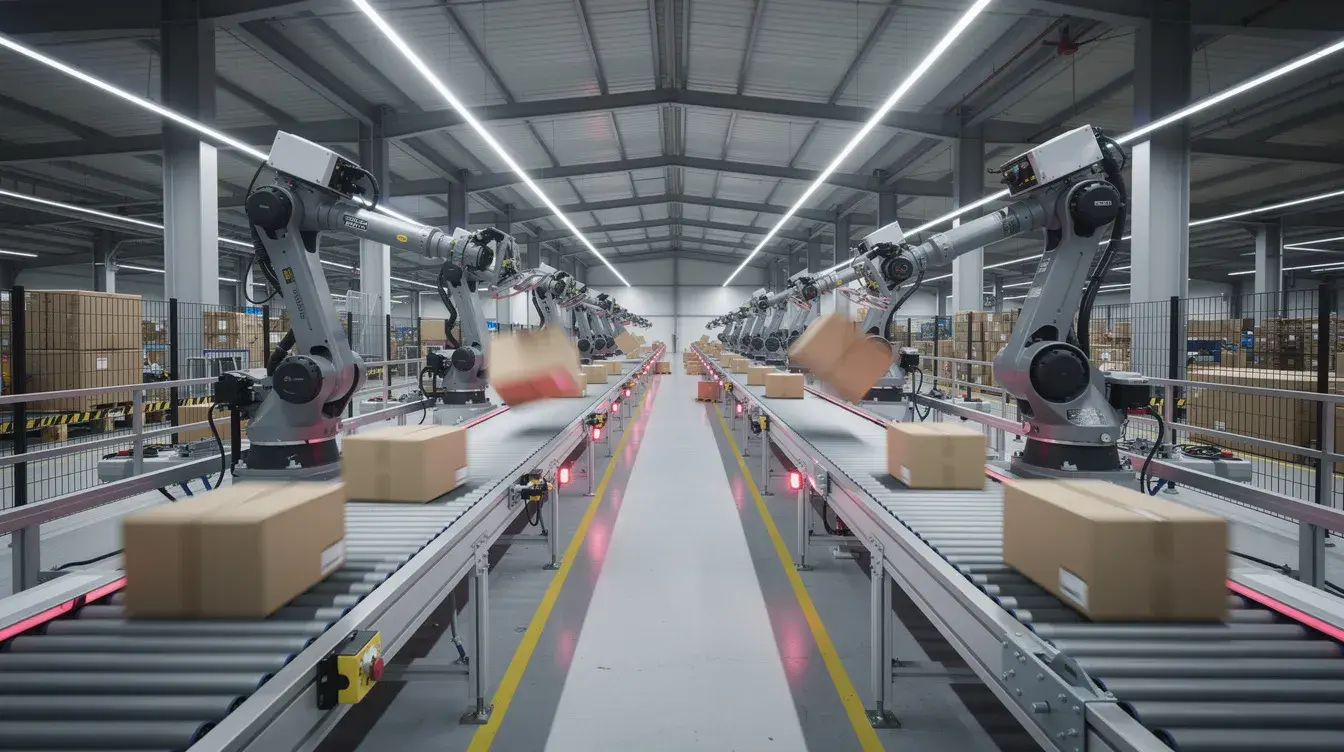
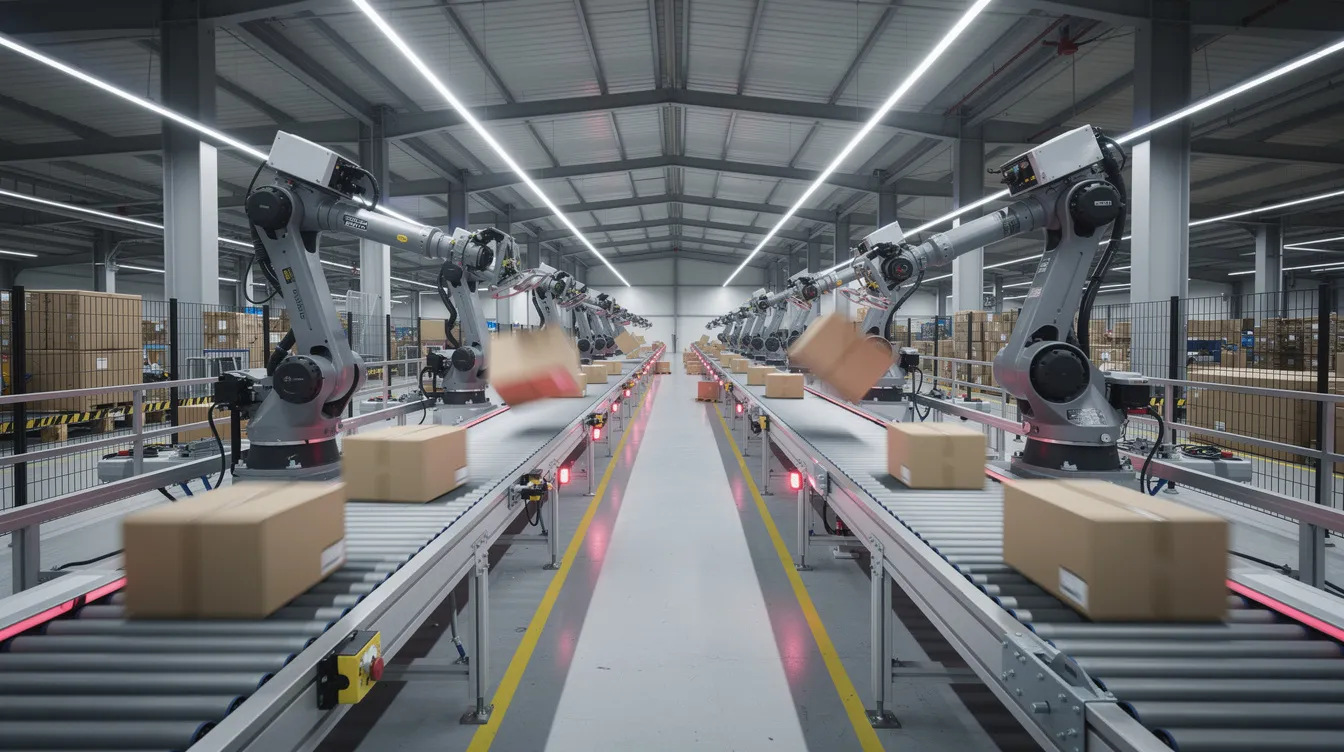
- Industrial & logistics: AI in supply chains - robotics, predictive inventory systems, autonomous vehicles - supports long-term warehouse demand, especially near ports and major population hubs. NAIOP's 2025 research highlights rising productivity and increasing capex per asset as AI transforms industrial operating models.
- Data centers: The most direct winner. AI model training and inference dramatically raise demand for high-power, low-latency sites. The US now hosts 15 of the world's 20 largest AI data centers, with growth concentrated in Northern Virginia, Dallas, Phoenix, Frankfurt, Tokyo, and key Asia Pacific hubs including Singapore and South Korea.
- Multifamily & single-family rentals: Indirect benefits from AI-fueled income growth in tech-heavy metros can lift real estate demand for high-end rentals. However, affordability pressures intensify. AI algorithms process real-time data for accurate home valuations, and AI can automate pricing and demand forecasting in residential property management, changing how rents and default risk are projected.
- Alternatives (self-storage, senior housing, healthcare, hospitality): AI-enabled operations create significant leverage. AI reduced on-property labor hours by 30% in self-storage. AI chatbots provide 24/7 customer service, improving client satisfaction and response times. Dynamic pricing and automated lead capture have lifted occupancy by several percentage points at early stage adopters. AI could improve operating cash flow by over 15% in lodging through staffing optimization and personalized learning-driven guest experiences. In senior housing, AI-driven staffing optimization promises NOI improvement but requires investment and skilled oversight.
AI, the labor market, and real estate demand
Real estate ultimately follows people and jobs. The labor market is the key transmission mechanism from AI's impact to CRE performance, and AI is expected to drive significant labor shifts in real estate and adjacent industries.
Three forces are at work. First, job displacement: AI adoption reduced entry-level employment by 13% in exposed occupations, and AI could lead to a 13% reduction in entry-level jobs by 2025 across multiple sectors. AI's impact on job displacement varies significantly by industry, with support staff and routine tasks most exposed. Second, job augmentation: remaining workers see higher productivity and wages, creating new spending power that supports multifamily and retail in certain metros. AI empowers real estate professionals to focus more on client relations and complex problem-solving instead of routine tasks. Third, job creation: new AI-native industries and occupations are emerging. AI adoption may create new job opportunities despite displacement, augmenting most jobs rather than eliminating them entirely.
These forces create four trajectories for local markets: shrinking headcount (old manufacturing hubs), flat but more productive headcount (hybrid workplaces), moderate expansion (metros gaining new industries), and high-growth AI hubs (Silicon Valley, Northern Virginia, Seattle, Singapore). Each trajectory maps to different real estate demand outcomes across property types.
Residential sector firms reduced full-time employees by 15% since 2021, and AI helped a residential company lower full-time employees by 15% - a pattern that underscores the shift happening within real estate firms themselves. Residential sector employment decreased by 15% since 2021 as reducing headcount through automation became standard at large firms.
For accredited passive investors, evaluating labor trajectories in a sponsor's underwriting package is now as important as location and cap rates. Ask: What is the projected growth of knowledge-worker employment in the target metro over 5–10 years? What happens to occupancy and rents under a high-displacement scenario?
Regional dynamics: US vs Europe vs Asia Pacific
AI's real estate impact is global but not synchronized. Regulatory, demographic, and infrastructure differences create distinct opportunity sets across regions, and real estate investors need the full picture before committing cross-border capital.
United States: The US has led in commercial deployment of generative AI since 2023, driving strong leasing in tech hubs like San Francisco, Austin, and Seattle. Data center corridors in Virginia, Texas, and Arizona continue to expand. Secondary office markets, however, face oversupply and weak absorption. AI companies cluster in gateway cities, widening the gap between primary and tertiary markets.
Europe: Stricter AI regulation and slower labor market flexibility dampen near-term AI-driven job churn. This limits both upside and downside: fewer dramatic leasing booms but also less displacement risk. Core office and industrial assets in major capitals remain resilient, while value-add plays in tech submarkets carry more execution risk due to regulatory concerns.
Asia Pacific: The region combines high AI adoption in economies like Singapore, South Korea, and parts of China with strong white-collar hiring, making it a key area for long-term growth in both data centers and Class A urban offices. Cross-border investors should scrutinize currency risk, geopolitical considerations, local power grid constraints, and regulatory divergence. Named cities like Singapore, Seoul, and Tokyo offer the most transparent investment environments within the region through 2024–2026 data.
How AI is transforming fund operations and underwriting
AI is not only changing tenant behavior - it is transforming how private equity firms and real estate fund managers operate, which directly affects accredited passive investors' risk and return profile. The real estate industry is embracing AI at the fund level, and firms that are integrating AI into their workflows gain a competitive advantage.
Private equity real estate managers now deploy AI across the investment lifecycle: sourcing off-market deals, screening sponsors, automating due diligence, and monitoring portfolio companies. AI tools can improve investment targeting by analyzing millions of data points. Automated Valuation Models (AVMs) leverage massive datasets to estimate property values with speed and accuracy, while AI can identify patterns in buyer behavior and market trends for better investment analysis.
Generative AI is increasingly embedded in fund operations. AI tools can automate report generation and investor communication, freeing investment teams from administrative work and giving them more free time for critical thinking and analysis. AI systems can flag potential compliance issues in real estate transactions for human review, reducing risk in fast-moving deal environments. AI improves transaction processes by automating contract generation and document reviews.
For example, large language models now summarize complex market studies in minutes, and AI models predict lease-up velocities by stress-testing rent rolls under different labor market outcomes. Leading firms treat AI as core infrastructure, investing in secure data platforms, traceability, and model governance. Laggards still rely on manual spreadsheets and fragmented data analytics - and that gap will show up in performance over time.
What 506 Investor Group members should look for in PPMs and manager conversations: the presence of an AI-enabled data stack, documented model risk controls, how AI use informs investment committee memos, and whether predictive analytics tools are applied to scenario planning.
Value creation with AI inside portfolio companies and properties
For private market investors, the most tangible AI value often sits inside operating businesses and properties owned by their portfolio companies. As AI continues to mature, mid-market portfolio companies - common in private placements and alternative investments - can now access sophisticated AI tools previously reserved for large corporates.
Accredited investors should expect sponsors to identify specific AI use cases at the asset level:
- Dynamic pricing for self-storage and multifamily that adjusts rents based on supply and demand signals
- Automated leasing workflows and virtual assistants that handle inquiries without human intervention
- Predictive maintenance for HVAC and building systems that reduces downtime and capex
- Energy optimization that lowers operating costs across property types
- AI-driven marketing strategies that enable hyper-personalized and automated outreach to prospective tenants
- AI tools that enhance visual marketing by virtually staging properties and improving property images
- AI systems that analyze buyer preferences to recommend properties matching individual needs, and lead scoring tools that prioritize prospects based on transaction likelihood
AI can improve operational efficiency and reduce costs in real estate across virtually every asset class. AI can enhance customer service in residential property management through chatbots and automated communication workflows. AI applications in real estate can streamline communications and operational workflows significantly, while AI enables automated target marketing that enhances the effectiveness of real estate advertising campaigns. AI tools help real estate agents and property managers produce content faster and with greater relevance.
Brokers and services could see a 34% increase in cash flow from AI adoption, and AI adoption can lead to a 34% increase in operating cash flow for brokers who automate processes and embrace AI at scale. AI can reduce on-property labor hours by 30%, which translates to significant savings across a multi-property portfolio. This makes AI readiness a key valuation driver at exit - a positive impact on underwriting that investment teams should weight heavily.

Risks, job displacement, and second-order effects investors must price in
AI upside comes with non-trivial risks that accredited passive investors need to incorporate into underwriting and scenario analysis. AI adoption in real estate introduces significant regulatory risks that cannot be ignored.
- Job displacement and wage pressure: Concentrated layoffs in certain industries can weaken local housing and office demand even if national employment remains strong. AI adoption may create a vicious cycle of job loss and reduced demand in vulnerable metros. While AI adoption may create new job opportunities, the transition period can be painful for specific communities and asset classes.
- Operational risks: Over-reliance on AI vendors creates lock-in. Cybersecurity and privacy concerns around tenant and investor data are growing. Model errors in rent pricing or underwriting can lead to mispriced deals. Regulatory shifts in AI governance - including data localization rules - add complexity for global portfolio companies.
- Capital markets risks: AI hype cycles can lead to mispriced data center and AI-adjacent assets. If too many investors chase the same AI themes, oversupply will compress returns. Valuation risk from speculative AI narratives is real, especially for AI investments in early stage markets.
- Geopolitics and national security: Export controls, data localization laws, and trade disputes may affect cross-border portfolio companies and real estate in sensitive locations, particularly in the Asia Pacific region.
The appropriate response is not avoidance but prudent risk management and diversification. 506 Investor Group members should reduce stress around AI exposure by building portfolios that span multiple asset classes, geographies, and AI adoption stages.
Due diligence questions for accredited passive investors in the AI era
This section is a practical checklist for 506 Investor Group members assessing new fund offerings, syndications, and direct deals. Copy these fundamental questions into your personal diligence process:
- How dependent is tenant demand on AI-sensitive industries? Is the business plan relying on aggressive AI-driven cost savings or income growth assumptions?
- What specific AI tools and data platforms does the sponsor use in underwriting and asset management? How is data quality ensured, and who governs model use and validation?
- Does the property or portfolio have sufficient power, connectivity, and cooling for AI-intensive tenants? What upgrades are budgeted, and who bears the cost?
- How would AI-enabled labor changes - either cost cuts through reducing headcount or wage inflation from more work demanded of remaining staff - affect the business plan over a 5–10 year hold?
- Does the sponsor's underwriting include sensitivity analyses under conservative AI adoption, delayed adoption, or AI backlash scenarios?
- Are there covenants around data access, infrastructure resiliency, and LP reporting that include AI-relevant KPIs?
These are not theoretical exercises. As AI continues to reshape the industry, the skill and understanding a sponsor brings to these questions will increasingly separate good deals from bad ones.
How 506 Investor Group can navigate the AI transition
The 506 Investor Group is a community of roughly 4,000 sophisticated accredited passive investors who share deal flow and due diligence with zero conflicts of interest. No sponsors or capital raisers are allowed. The group has invested over $1.5 billion in deals with special terms negotiated on behalf of members.
That scale creates a meaningful edge in AI-exposed deals. Members can secure better economics: lower fees, enhanced reporting on AI-related risks, and negotiated covenants around data, power infrastructure, and capex reserves. The group's no-self-promotion structure supports unbiased evaluation of AI narratives in offering documents, cutting through sponsor hype around so-called "AI-driven" assets.
Members should focus on peer-led due diligence for AI-related themes - comparing assumptions on labor market trajectories, data center saturation, and proptech adoption across multiple offerings. The group will continue to share research, scenario analysis, and post-close performance updates to build a collective insight into AI's long-term effects on private real estate and broader alternative investments.
Conclusion: AI is reshaping real estate, but fundamentals still rule
We are entering a new era for commercial real estate. AI intensifies dispersion, favors prepared sponsors with data-rich investment strategies, and creates both new risks and durable opportunities across sectors and regions. But technology alone does not make a good deal. Artificial intelligence AI is a tool - a powerful one - and the fundamentals still rule: location, supply-demand balance, leverage, governance, and sponsor ability.
For accredited passive investors in the 506 Investor Group, the edge will come from combining traditional real estate analysis with a sophisticated understanding of AI's impact on tenants, operations, and fund managers. The future belongs to investors who promote reflection, ask hard questions, and use the group's collective scale to separate signal from noise.
Integrate these AI considerations into your next deal review. Challenge sponsor assumptions. Share your findings with fellow members before committing capital. That is how this community has always operated - and it is exactly the approach this moment demands.