
AI Investment Opportunities in the Alternative Investment or Private Markets for the Accriedeted Invetor or the Qualified Purchaser
Introduction: Why AI in Private Markets Matters Now
Artificial intelligence is no longer a speculative bet. Between 2024 and 2026, AI has attracted record capital into private markets, with global venture capital investment in AI firms reaching roughly $258.7 billion in 2025 alone-representing 61% of all VC deal value worldwide. AI creates new business opportunities while also bringing competition risks across nearly every sector, and much of the value creation in AI is happening in the private realm, well before companies reach public markets.
This article is written for sophisticated investors in the 506 Investor Group community. It focuses on practical, actionable AI investment opportunities rather than theory. Private market and alternative investment channels offer exposure to artificial intelligence through two paths: backing AI-native companies and funds, and using AI-driven tools to improve your own deal sourcing, due diligence, and portfolio management.
What you will learn:
- How accredited investor status and qualified purchaser status determine which AI deals you can access
- The regulatory mechanics of 3(c)(1) and 3(c)(7) fund structures in AI
- Core AI investment themes worth evaluating across infrastructure, software applications, and operational enhancements
- Vehicles and structures for gaining AI exposure, from direct deals to co-investments
- How to evaluate, size, and monitor AI positions within a broader portfolio
- The role of conflict-free peer communities in sourcing and vetting AI alternatives

Accredited Investor vs. Qualified Purchaser: Who Can Access What?
Your investor classification directly shapes which AI-focused private deals you can access. Here is what each category requires and why it matters.
Accredited investor definition under SEC Rule 501(a):
- Annual income of at least $200,000 individually (or $300,000 joint income with a spouse) in each of the last two calendar years, with a reasonable expectation to meet that threshold in the current year
- Or net worth above $1 million (individually or jointly), excluding primary residence value
- Certain professional certifications (Series 7, 65, 82) and executive officers or directors of an issuer also qualify as accredited investors
- The SEC expanded accredited investor criteria on August 26, 2020 to include these professional designations, recognizing financial sophistication beyond pure income or net worth
Accredited investors must meet specific wealth or income requirements, and accredited investors include individuals with specific financial qualifications. They can invest in private market securities and access higher-risk investment opportunities such as venture capital funds, angel deals, and private funds structured as 3(c)(1) vehicles. To understand more about how to qualify as accredited investors, review the current SEC standards carefully.
Qualified purchaser definition under Section 2(a)(51) of the Investment Company Act:
- Individuals or family-owned entities (including any estate planning entity) with at least $5 million in investments
- Entities and investment advisers with at least $25 million in owned or managed investments
- Qualified purchasers have access to exclusive private funds, including 3(c)(7) funds
The practical implication: accredited investors have lower financial thresholds than qualified purchasers. All qualified purchasers are also considered accredited investors, but not the reverse. This distinction determines whether you access smaller early-stage AI funds or larger institutional-grade vehicles. Qualified purchaser status opens the door to a broader range of AI investment opportunities and typically better terms, governance, and reporting.
Regulatory Building Blocks: 3(c)(1) and 3(c)(7) Funds in AI
Many AI alternative investments are structured as private funds relying on Sections 3(c)(1) or 3(c)(7) of the Company Act of 1940. These exemptions from the Investment Company Act allow fund managers to raise capital without registering as an investment company, provided they meet specific investor and structural requirements.
3(c)(1) funds:
- Typically available to accredited investors and other qualified purchasers
- Limited to 100 beneficial owners (or 250 for certain qualifying venture capital fund structures)
- Commonly used by smaller AI venture funds, early-stage machine learning funds, and AI-focused syndicates
- Lower minimums but often earlier-stage, higher-risk exposure
3(c)(7) funds:
- Only qualified purchasers can invest
- Can have up to 2,000 qualified purchasers before triggering additional registration requirements under securities laws
- Favored by institutional-grade AI growth equity and infrastructure funds aggregating large pools of capital
- More formal governance, better reporting, and often negotiated fee breaks
The trade-offs matter. 3(c)(1) AI funds may let you in at $50,000–$250,000, but you are taking on earlier technology risk. 3(c)(7) AI funds typically require $1 million or more and tend to focus on later-stage, scaled AI businesses with proven revenue. Members of 506 Investor Group may encounter both structures in the community's shared deal flow, often with negotiated terms unavailable to an individual investor acting alone.
Core AI Investment Themes in the Private Markets
AI is not a single sector. It is a stack of opportunities, and each layer carries a different risk and return profile. Here are the key themes realistic for accredited investors and qualified purchasers in 2024–2026:
- Foundational model companies: Large language models, multimodal models, and domain-specific LLMs. Specialized funds target investments in foundational models and AI infrastructures at this layer.
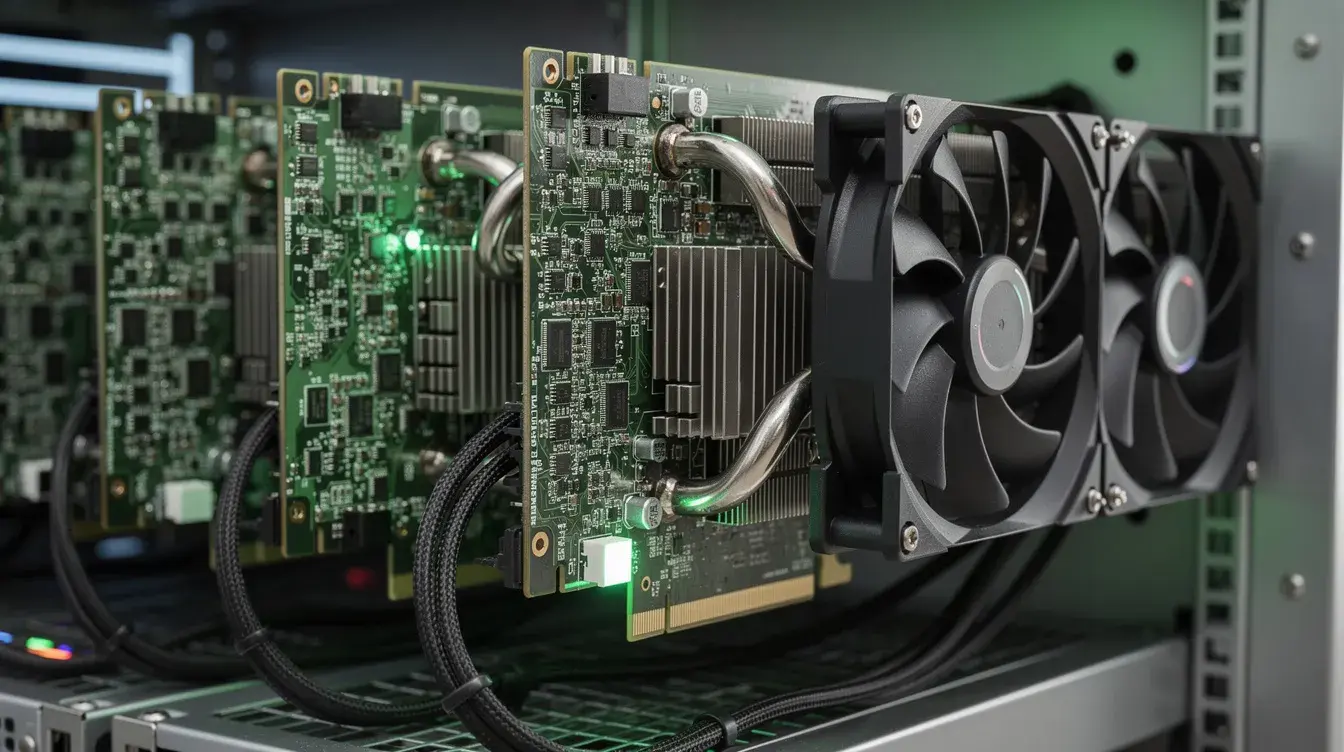
- AI infrastructure: GPU hosting, MLOps platforms, data labeling, and synthetic data tools. In 2025, infrastructure-oriented AI firms attracted roughly $109.3 billion in VC funding-more than two-thirds of all AI venture capital. Institutional investors are increasingly focusing on the hardware side of AI, and the AI infrastructure sector is projected to require trillions of dollars of investment globally by 2030.
- Vertical AI applications: Healthcare diagnostics, logistics optimization, cybersecurity, and legal tech. These typically invest through venture capital and growth equity funds.
- Picks and shovels: Data centers, fiber networks, specialized cloud providers, and energy systems. Investments in private infrastructure funds are necessary for data centers and specialized energy systems to support AI workloads. Major private credit funds are also focusing on financing AI infrastructure and development.
- AI in fintech and asset management: Quant strategies, credit underwriting models, and risk analytics platforms.
AI adoption raises risks for companies relying on traditional business models, which is precisely why capital continues flowing into AI-native alternatives. For a deeper look at building deal flow in alternative investments for accredited investors, consider how these themes map to your own portfolio gaps.

Vehicles for AI Exposure: Direct Deals, Funds, and Co-Investments
Accredited investors and qualified purchasers can access AI through multiple structures. Each carries different minimums, liquidity profiles, and control.
- Direct private company investments: Angel rounds or late-stage pre-IPO rounds in AI startups. Higher concentration risk but potential for outsized returns. Accredited investors can invest through platforms like Forge for secondary access to private companies.
- AI-focused venture capital and growth equity funds: Accredited investors focus on smaller or mid-tier venture funds for early-stage AI applications, with check sizes starting around $50,000–$250,000 in 3(c)(1) structures. Qualified purchasers access 3(c)(7) deep-tech and infrastructure funds, often requiring $1 million or more. A particular fund may hold 15–40 portfolio companies, providing diversification across the AI stack.
- AI strategies inside multi-strategy alternative funds: Private equity funds with dedicated AI value-creation teams, and hedge funds or quant funds using AI models for trading or risk management. Exchange traded funds and mutual funds offer liquid AI exposure, but private markets can target a distinct risk/return profile compared to public tech stocks and public markets.
- Co-investments and SPVs: Special purpose vehicles created to back a single AI deal alongside a lead fund. Often offered to LPs at reduced or no management fee and carry. Private equity secondaries and continuation funds can also provide access to mature companies in AI.
Evaluating AI Deals as an Accredited Investor or Qualified Purchaser
Enthusiasm for AI is not a substitute for underwriting. Investing involves risk, and rigorous evaluation aligned with your net worth and risk tolerance is non-negotiable. Valuation risks are significant in the rapidly evolving AI space-median pre-money valuations for AI companies hit $33 million in 2024, while averages skewed to $554 million due to mega-rounds.
Key due diligence angles for any AI security or investment product:
- Technology edge: Proprietary models vs. API wrappers; defensibility of data assets; dependence on platforms like OpenAI or Anthropic
- Business model: Recurring vs. project revenue; gross margins; customer acquisition costs. AI enhances due diligence and valuation processes, and machine learning models help process financial statements and flag operational risks automatically.
- Regulatory and ethical risk: Data privacy (HIPAA, GDPR), model hallucinations, sector-specific compliance. Platforms for AI investing are increasingly leveraging data analytics and machine learning to surface these risks earlier.
Accredited investors in 3(c)(1) funds may rely on the investment manager's underwriting plus independent research from communities like 506 Investor Group. Qualified purchasers in 3(c)(7) funds typically perform institution-style diligence. An SEC-registered investment adviser or exempt reporting adviser can support evaluation, but even sophisticated investors should cross-check adviser views with peer diligence to avoid conflicts. This article does not constitute investment advice-always consult qualified investment advisors for your situation. For help reading private equity reports, standardized metrics like MOIC and IRR remain essential.
Risk Management, Portfolio Construction, and Liquidity Considerations
AI's upside is real, but so are the illiquidity and concentration risks inherent in alternative investments and private investment vehicles.
- Position sizing: Cap AI private investments as a percentage of overall net worth. Diversify across stages, geographies, and AI themes. High net worth individuals and potential investors alike should avoid overconcentrating based on hype cycles.
- Liquidity and time frames: Typical 7–12 year fund lives for AI venture funds. Liquidity constraints in alternative vehicles typically tie up capital for 5 to 10+ years. Private AI investments typically feature multi-year lockups unlike liquid public stocks. Secondaries market tools improve access to private companies while partially addressing liquidity constraints, but often at a discount.
- Fee structures: Standard "2 and 20" is under pressure. Negotiated terms-lower management fees, reduced carry, fee breaks for larger commitments-are increasingly common. Collective buying power from communities like 506 Investor Group's 4,000+ members can secure better fee terms, protecting net returns for high risk investments.
- Stress-testing assumptions: Model scenarios for AI adoption rates, regulatory shifts, and competition from Big Tech. In 2025, 82% of incremental AI investment dollars came from rounds of at least $1 billion, concentrating risk among a handful of companies. Securities and Exchange Commission filings and Financial Industry Regulatory Authority guidance can also flag emerging compliance issues.
Using AI as a Tool to Improve Your Own Investment Process
Beyond investing in AI, accredited investors and qualified purchasers can deploy AI tools to sharpen their alternative investment decision-making. This does not replace human judgment, but it compresses the time from deal identification to informed decision.
- Deal sourcing: AI algorithms can enhance sourcing of proprietary deal flow in private markets. Use AI-driven screens and news summarizers to surface AI-related private investment opportunities earlier, then cross-reference with peer networks for validation.
- Due diligence: Apply AI tools to parse offering memoranda, financial statements, and legal documents for red flags. Summarize technical whitepapers to focus human attention on the highest-risk items.
- Portfolio monitoring: AI dashboards track KPIs across fund investments and direct holdings, identifying hidden concentration risk-many funds owning the same flagship AI unicorns, for instance.
- Caveats: Human oversight is essential. Data quality and model limitations matter, especially when dealing with unregistered securities, complex fund terms, or bespoke structures. No tool replaces understanding what you own.
The Role of 506 Investor Group in Sourcing and Vetting AI Alternatives
506 Investor Group is a conflict-free community of over 4,000 sophisticated investors-accredited investors and qualified purchasers-sharing alternative investments without sponsors, capital raisers, or self-promotion. Investment opportunities come exclusively from members.
How this model benefits AI-focused investors:
- Collective due diligence: Members share technical, legal, and financial insights on complex AI or machine learning deals, providing financial sophistication criteria that no single individual investor can match alone
- Aggregated buying power: Over $1.5 billion invested into deals with special terms negotiated on behalf of members, including lower fees, improved governance, and co-investment access
- Vetted deal flow: Access to AI 3(c)(1) and 3(c)(7) funds, direct AI deals, and SPVs that individual investors might never see. Members benchmark terms across multiple AI offerings to avoid overpaying in overheated sectors
- Zero conflicts: No one in the group earns carried interest, management fees, or placement fees. This structure exists to protect investors from the misaligned incentives common in the private investment world
Practical Next Steps for Accredited Investors and Qualified Purchasers
Eligibility, AI themes, and disciplined process must work together. Here is your checklist:
- Confirm your status. Verify whether you qualify as accredited based on annual income, net worth threshold (excluding primary residence), or professional credentials. If your investments meet the qualified purchaser criteria of $5 million or more, you unlock 3(c)(7) access. A qualified client or qualified institutional buyer designation may also apply depending on the particular fund. Knowledgeable employees of certain funds may also qualify under specific exemptions.
- Define your AI allocation. Determine what percentage of your portfolio you can commit to illiquid, high-conviction AI positions. Consider your annual income stability, net worth, family office or estate planning entity structures, and liquidity needs. Remember that an investment fund focused on AI is not a substitute for a diversified investment strategy.
- Choose your vehicles. Match your capital, risk tolerance, and time horizon to the right structures-direct deals, AI-focused funds, co-investments, or AI sleeves within multi-strategy private equity funds.
- Build a repeatable workflow. Use AI tools to streamline research and monitoring. Leverage peer communities like 506 Investor Group for unbiased perspectives and shared due diligence on complex AI offerings, where no one is trying to raise capital or purchase securities for their own benefit.
- Stay current. Regulatory updates from the Securities and Exchange Commission and changes to the Securities Act and Investment Advisers Act affect how funds operate and who can invest. Review whether your financial criteria still align with the risk level of your AI exposure.
AI in private markets rewards disciplined investors who understand both the technology and the terms. The opportunity set is large and growing, but so is the importance of rigorous, conflict-free analysis. Start by confirming your eligibility, defining your allocation, and connecting with a peer community that shares your commitment to independent diligence.